
𝗥𝗮𝘁𝗲 𝗼𝗳 𝗳𝗼𝗿𝗰𝗲 𝗱𝗲𝘃𝗲𝗹𝗼𝗽𝗺𝗲𝗻𝘁 𝗶𝘀𝗻’𝘁 𝗮 𝗴𝗲𝗻𝗲𝗿𝗶𝗰 𝘀𝘁𝗿𝗲𝗻𝗴𝘁𝗵 𝗾𝘂𝗮𝗹𝗶𝘁𝘆
The ability to rapidly apply force is task dependent

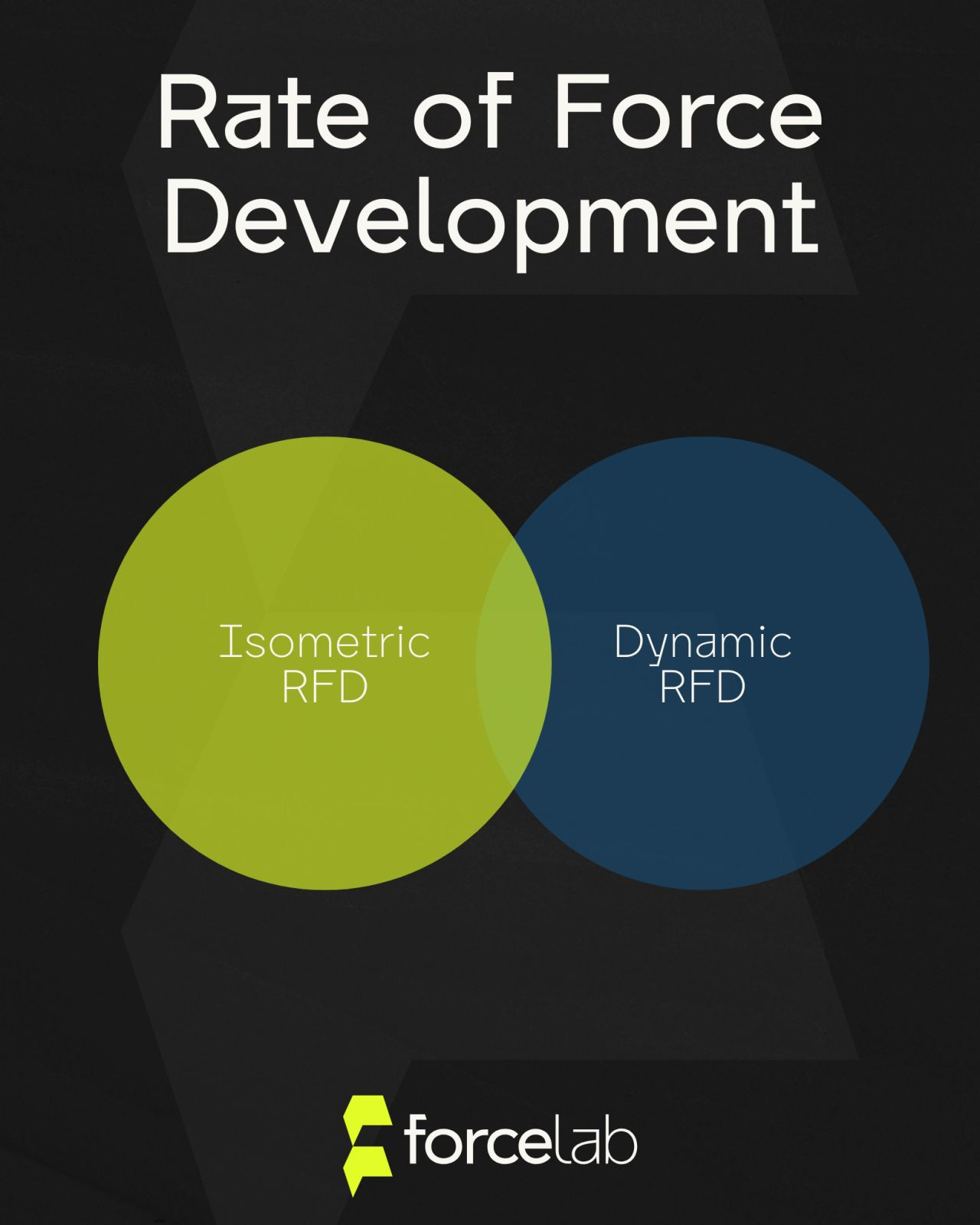
For example, an individual who can rapidly produce force during a SSC action won’t necessarily be able to do the same in an isometric task. In fact, there’s very little overlap between them and they represent distinct forms of force expression.
This is important to know because the term rate of force development has been used interchangeably between isometric and dynamic actions, despite being totally different strength qualities.
This is similar to the ‘power’ terminology issue where the quantity has been treated as a general aspect of force expression despite it being extracted from a range of tasks that share limited commonality.
The inconsistency within the literature on what RFD actually describes make it challenging to interpret findings and apply recommendations.
It’s probably best to think of RFD as an attribute that represents the early part of the isometric force-time curve, as that’s the condition that make it statistically independent from other strength qualities. With this in mind, quantities such as instantaneous force at a specific time point on that curve will do the job too, and may indeed do it better.
Take home point: think of the test itself as the key factor in strength diagnosis, with the measures simply being a vessel to deliver test information.
If you’re interested in more discussions like this, consider subscribing for deeper insights into strength science